Welcome back to road map, this is week 7. Happy 4th of July everyone!
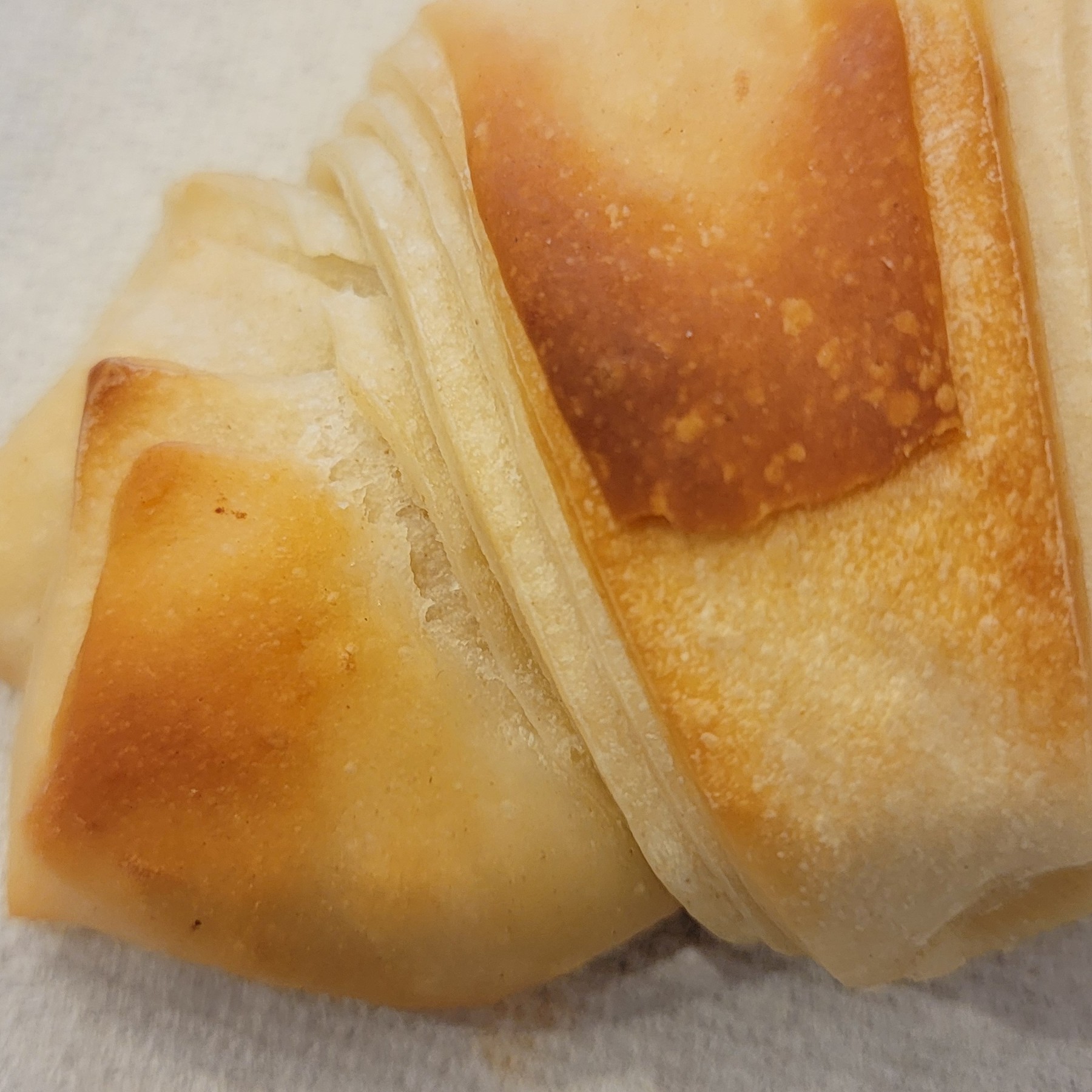
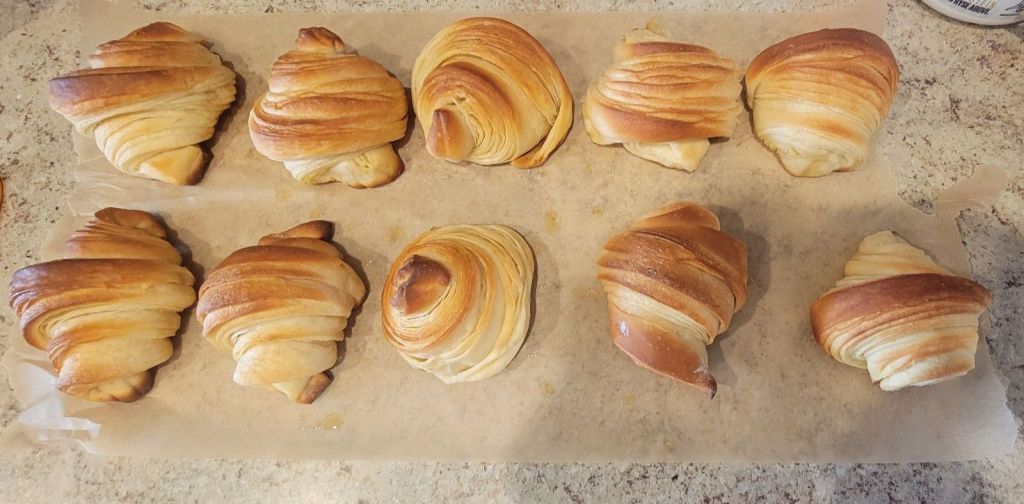
This week I wanted to talk about dough lamination. A term I didn’t know until I started making croissants. I have my croissants pictured above. Dough lamination refers to a layer of butter added to dough that gives bread distinct layers. The layers of a croissant.
Lamination is done for many baked items in differing ways. It’s used for danishes, scones and even pie crusts. For scones and pie crusts it’s loose butter used to give it the flakiness. Croissants and danishes have a sheet of butter. The butter is a solid layer between the dough.
I start my butter layer in parchment paper. I fold the paper creating a pocket where I place the butter. I let it sit until the butter is soft. I then roll the butter out to the dimensions of my folded parchment paper and pop that in the fridge.
Once its solidified I bring out the dough. I roll out the dough wider than my parchment paper pocket. That way when I place the butter down the dough encases the whole butter sheet. I then roll the dough and fold the dough with what is called a book fold or double fold. Fold both sides in and then at the middle resembling a book. Next I do a letter fold or single fold. This creates the amount of layers I want by multiplying the amount of times butter and dough are layered.
Once baked you have a separation of dough that creates those iconic croissant layers. It sounds difficult but if you watch a few videos or just read the recipe you’ll have award winning croissants made in home. Most of your time is spent waiting for the dough to Proof. I recommend following the recipe from the New York Times.
Thanks for reading and again happy 4th!
 Housed and Fed